
Views: 0 Author: Site Editor Publish Time: 2026-11-04 Origin: Site


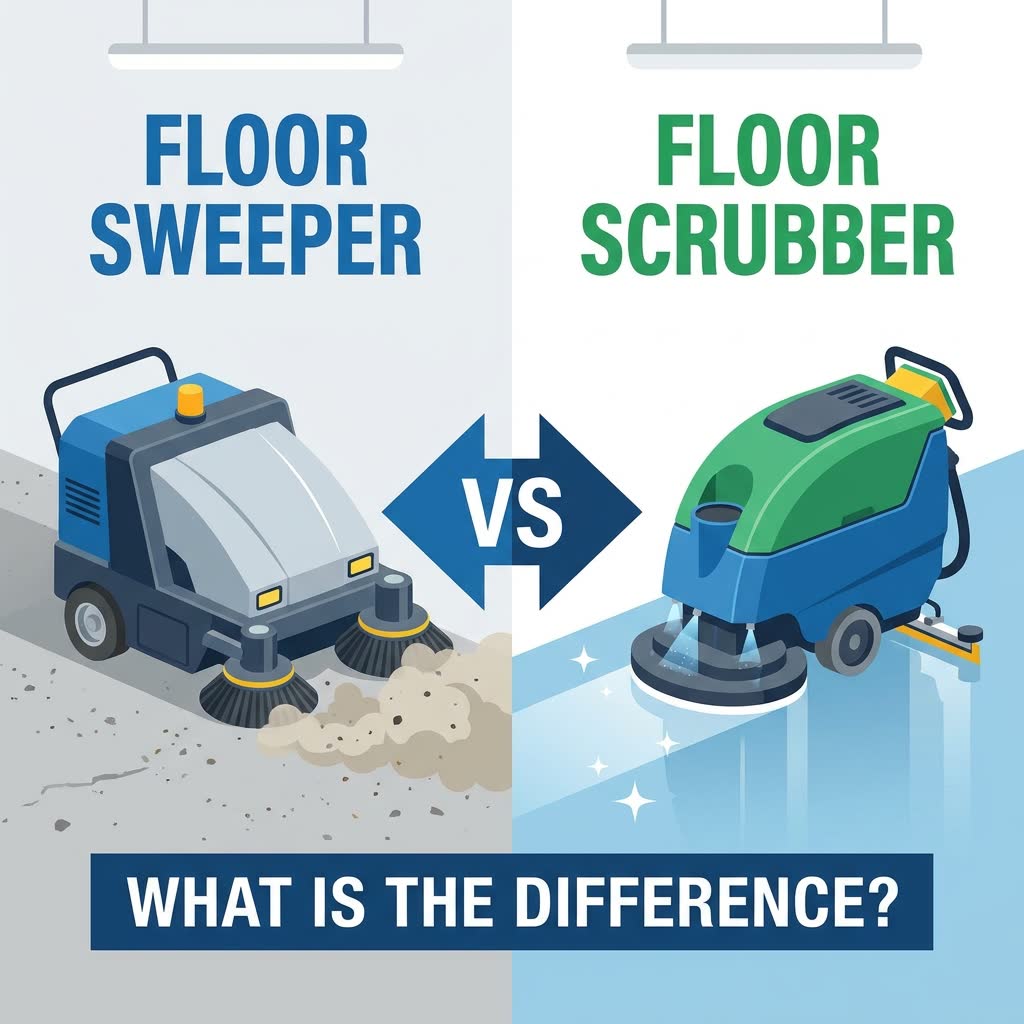
Deploying the wrong industrial cleaning equipment accelerates machine wear, increases labor hours, and compromises facility safety. Facility managers frequently conflate the capabilities of sweepers and scrubbers, assuming they are interchangeable. They are not two versions of the same tool. This misunderstanding consistently leads to operational failures on the warehouse floor. Attempting to clear heavy dry debris with a scrubber destroys delicate squeegees, clogs recovery tanks, and burns out vacuum motors.
We see this on job sites constantly. A crew tries to wash a concrete floor covered in pallet splinters without sweeping first. The result is a destroyed machine and hours of unnecessary downtime. Resolving the floor sweeper vs floor scrubber dilemma requires a strict technical evaluation of your facility's soil profiles, total square footage, and floor composition. This guide breaks down the exact mechanical differences between these machines and provides a practical framework for selecting the right equipment to maintain optimal hygiene.
Distinct Primary Functions: Sweepers are engineered exclusively for dry debris (dust, gravel, packaging, hair), while scrubbers are designed for wet cleaning, degreasing, and leaving hard floors immediately dry.
The Pre-Sweeping Mandate: Unless utilizing a specialized cylindrical combination machine, facilities must sweep floors before scrubbing to prevent catastrophic damage to the scrubber's vacuum and squeegee systems.
Configuration Dictates Efficiency: The choice between walk-behind and ride-on models hinges on square footage, aisle width, and labor allocation, with ride-ons offering superior scale and reduced operator fatigue, but requiring higher initial capital.
Maintenance Realities: Equipment upkeep extends beyond the purchase price, heavily influenced by consumable replacement rates (brushes, pads, squeegees) and operator training requirements.
Table of Contents
Industrial floor sweepers function entirely without water. They rely on mechanical agitation and targeted airflow to manage dry debris. The primary cleaning mechanism involves rotating cylindrical main brooms. These brooms spin at exceptionally high speeds, physically lifting dirt, gravel, and industrial trash from the floor surface. The machine then throws this debris directly into a collection hopper. Two distinct throwing methods exist in the field. Direct-throw sweepers push debris forward into a front-mounted hopper. Over-throw sweepers launch debris up and over the broom into a rear hopper. Over-throw designs typically allow for greater hopper capacity and better loading efficiency when dealing with bulky trash.
Side brooms serve as the secondary collection mechanism. They extend beyond the machine's physical footprint. These circular brushes pull debris away from walls, pallet racks, and baseboards. They direct loose dirt directly into the path of the main cylindrical broom. This ensures edge-to-edge cleaning along warehouse perimeters. Operators can adjust the down-pressure of these brooms based on floor conditions. Excessive pressure causes premature bristle wear, while insufficient pressure leaves heavy debris behind.
Dust control represents a critical component of modern sweeping technology. As the brooms agitate the floor, they inevitably kick up fine particulate matter. To prevent this dust from becoming airborne, sweepers integrate powerful vacuum fans. These fans pull the dusty air through specialized panel or cartridge filters. The filters trap microscopic particles effectively, ensuring only clean air exhausts back into the facility. Operators must utilize built-in filter shakers regularly to clear accumulated dust and maintain proper airflow.
Sweepers excel in highly specific environments. Their target soil profile includes dry dirt, sawdust, metal shavings, and paper scraps. They handle fibrous materials like hair, threads, and pallet splinters with ease. Facilities generating high volumes of dry, bulky waste rely on sweepers as their primary defense. Manufacturing plants, lumber yards, and distribution centers require robust sweeping capabilities to maintain safe transit routes for forklifts.
Industrial floor scrubbers tackle embedded grime and liquid spills. They utilize a highly controlled three-stage wet cleaning process. First, the machine dispenses a precise mixture of water and cleaning chemical. This solution flows directly onto the floor surface. Advanced scrubbers feature variable flow rates. Operators can increase water output for heavy stains or decrease it for daily maintenance. This controlled dispensing prevents floor flooding and conserves resources.
Solution Dispensing: The machine releases a measured amount of water and detergent directly into the center of the scrub deck.
Mechanical Agitation: Heavy-duty brushes or pads scrub the floor at high RPMs to break down bonded soils and grease.
Liquid Recovery: A rear squeegee and vacuum system immediately extract the dirty water, leaving the floor dry.
Mechanical agitation immediately follows the solution dispensing. Heavy-duty scrub decks house either disc or cylindrical brushes. Disc brushes rotate flat against the floor. They provide aggressive scrubbing action for flat, even surfaces. Cylindrical brushes spin on a horizontal axis. They excel at reaching into grout lines and uneven concrete joints. The brushes break down tough stains, grease, and sticky residues. Dry sweeping simply cannot remove these bonded soils. Pad drivers also allow operators to attach specialized abrasive pads for different cleaning intensities.
The final stage is immediate liquid recovery. A vacuum-powered parabolic squeegee trails behind the scrub deck. It collects the dirty water slurry as the machine moves forward. The squeegee blades conform precisely to the floor profile. This creates a tight, continuous seal. The powerful vacuum motor pulls the liquid through a hose and into a designated recovery tank. Baffle systems inside the tank prevent foam from reaching the vacuum motor.
Surface moisture management is the critical outcome of this process. A properly functioning scrubber leaves hard floors bone-dry. The cleaned area becomes immediately safe for foot traffic and forklift operations. Scrubbers target complex, bonded soil profiles. They are essential for removing embedded grime, heavy grease, oil spills, and tire marks. Food processing plants, healthcare facilities, and automotive shops depend entirely on scrubbers to maintain sanitary, slip-free environments.
Selecting the right equipment begins with a thorough audit of your facility's debris profile. You must map specific soil types directly to machine capabilities. Start by observing the floor at the end of a typical production shift. Note the primary composition of the waste. If a facility generates predominantly dry, bulky debris, a sweeper is the logical choice. Environments like lumber yards, parcel sorting centers, and metal fabrication shops fall into this category. Sweepers handle the heavy lifting of physical trash removal.
Conversely, facilities dealing with liquid spills or deep grime require a scrubber. Food and beverage plants demand high sanitation levels. Pharmaceutical labs and commercial kitchens face similar strict requirements. Scrubbers remove the sticky residues and fats that sweepers simply push around. Evaluate the daily accumulation ratio. If 80% of the soil is dry and loose, prioritize sweeping equipment. If the primary challenge involves embedded dirt, chemical spills, and surface stains, prioritize scrubbing equipment.
Some environments present a mixed soil profile. Warehouses with heavy forklift traffic often deal with both wooden pallet splinters and black rubber tire marks. In these scenarios, facility managers must evaluate which soil type poses the greatest safety hazard. Often, this mixed profile necessitates a two-step cleaning process. Identifying the dominant soil type prevents the misapplication of cleaning technology and extends machine lifespan.
Floor composition dictates brush selection, pad abrasiveness, and overall machine type. Different surfaces react uniquely to mechanical agitation. Polished concrete requires soft, non-abrasive pads. These pads maintain the floor's high-gloss finish without scratching. Epoxy coatings need medium-duty nylon brushes. These brushes clean effectively without degrading the protective resin layer. Vinyl Composite Tile (VCT) demands careful pad selection. Aggressive scrubbing easily strips the wax finish prematurely, requiring extensive recoating labor.
Uneven surfaces present distinct operational challenges. Broom-finished concrete, exposed aggregate, and asphalt require specialized approaches. Using standard sweepers on wet, uneven surfaces creates a thick mud slurry. This mud degrades brush bristles and clogs the debris hopper. Scrubbing uneven floors requires cylindrical brushes rather than flat discs. Cylindrical bristles reach down into the low points of the floor profile. Disc brushes simply glide over the top, leaving dirt trapped in the crevices.
Implementation risks rise sharply when surface compatibility is ignored. Applying highly abrasive scrubber pads on coated floors risks permanent surface damage. Operating heavy ride-on equipment on newly poured concrete can cause structural cracking. Always match the brush stiffness and pad material to the specific flooring. Consult the flooring manufacturer's maintenance guidelines before deploying heavy industrial cleaning equipment.
Floor Surface Type | Recommended Equipment | Brush / Pad Selection | Primary Risk Factor |
|---|---|---|---|
Polished Concrete | Disc Scrubber | White or Red Non-Abrasive Pads | Dulling the high-gloss finish with aggressive grit. |
Epoxy Coated | Disc or Cylindrical Scrubber | Soft Nylon Brushes | Scratching or degrading the protective resin layer. |
Uneven Asphalt | Heavy-Duty Sweeper | Stiff Polypropylene Brooms | Creating mud slurries if wet scrubbing is attempted. |
Vinyl Composite Tile (VCT) | Disc Scrubber | Red Cleaning Pads | Stripping the wax coating prematurely. |
Facility size directly influences equipment scalability. Cleanable square footage serves as the primary metric for machine sizing. Small areas under 20,000 square feet generally suit compact, walk-behind equipment. These machines cover the area efficiently without overextending operator stamina. Facilities exceeding 50,000 square feet necessitate larger machines. Ride-on equipment becomes essential at this scale to maintain operational efficiency and complete cleaning routes within a single shift.
Layout constraints are equally critical to the selection process. You must evaluate maneuverability requirements carefully. Measure narrow aisle widths between racking systems. Check doorway clearances and turning radiuses at the end of production lines. A massive machine offers high theoretical productivity. However, it becomes completely useless if it cannot navigate between your specific storage racks. Operators will simply skip inaccessible areas, leading to inconsistent facility hygiene.
Hard physical constraints also dictate the final equipment choice. Evaluate elevator weight limits if the machine must service multiple floors. Check the incline grade of loading ramps. Fully loaded scrubbers carry hundreds of pounds of water. The machine's traction drive motor must possess enough torque to safely navigate these inclines without slipping. Document all physical bottlenecks before reviewing equipment specifications.
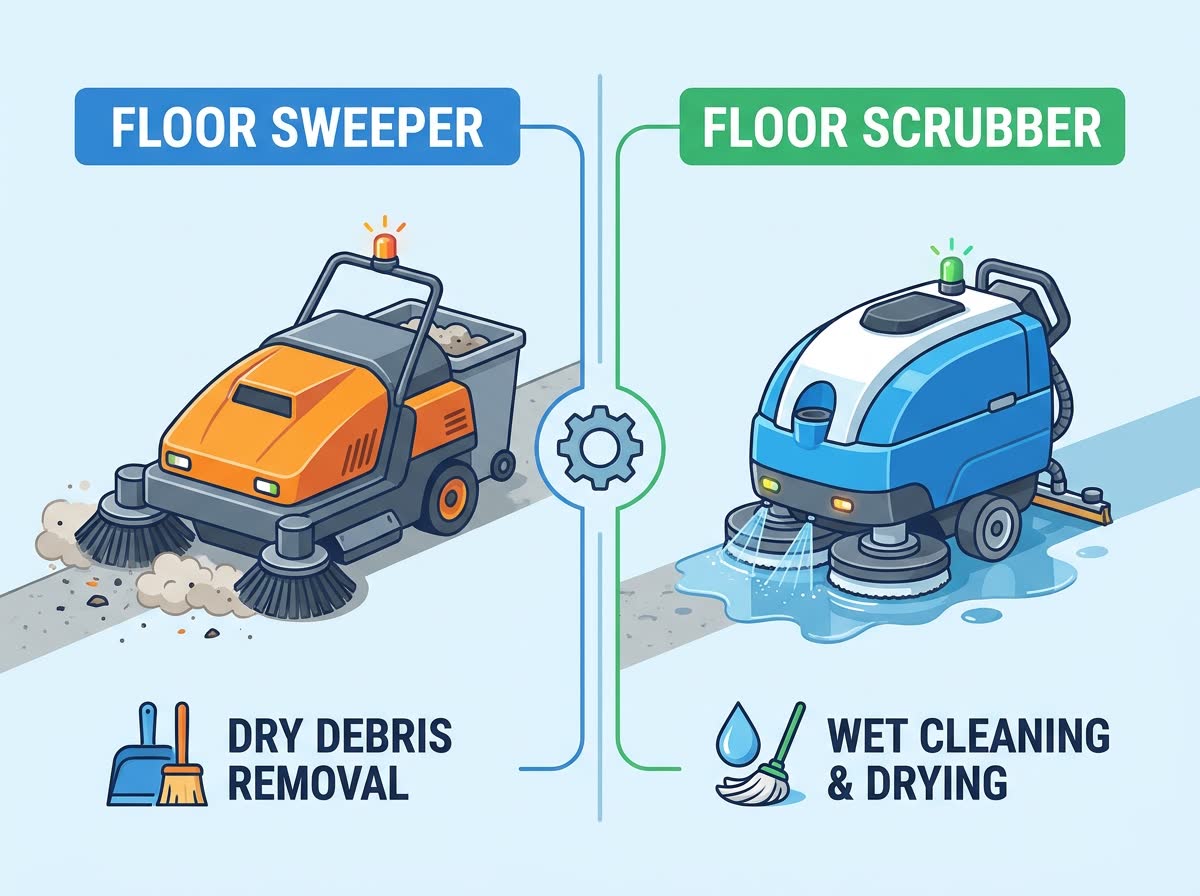
Walk-behind units offer exceptional agility in confined spaces. Operators manually guide these machines from behind. This configuration makes them perfect for navigating tight corners and congested production floors. They easily clean around stationary machinery, active workstations, and narrow storage aisles. The operator maintains excellent line-of-sight directly in front of the scrub deck. This visibility prevents accidental collisions with inventory or personnel.
These machines promote significant resource conservation. A walk-behind scrubber can save up to 70% of water compared to traditional mop-and-bucket methods. The controlled dispensing system ensures optimal chemical usage. Modern walk-behinds feature traction drive systems. A dedicated motor propels the machine forward, meaning the operator only needs to steer. This represents a massive ergonomic upgrade over older pad-assist models that required manual pushing.
However, walk-behind units have distinct operational limitations. Guiding a machine across massive warehouses takes a physical toll on operators. Operator fatigue inevitably sets in during long shifts. This fatigue leads to inconsistent cleaning speeds. As the operator slows down, the machine dispenses too much water in one spot. Overall productivity drops significantly when deploying walk-behinds in facilities exceeding 50,000 square feet. They are best deployed in targeted zones rather than wide-open expanses.
Ride-on units transform floor cleaning in expansive facilities. They offer tremendous labor-saving advantages. The operator sits comfortably on the machine, steering it with a steering wheel and foot pedals. Because the machine does the heavy lifting, it drastically reduces operator fatigue. This ergonomic advantage allows for consistent, high-speed cleaning throughout an entire eight-hour shift. The productivity gains in large distribution centers are immediate and measurable.
Ride-on machines feature significantly larger solution tanks and debris hoppers. This expanded capacity extends run times. It drastically reduces the frequency of stopping to dump dirty water and refill clean water. Ride-ons also apply higher downward brush pressure. The heavy chassis weight pushes the scrub deck firmly against the floor. This improves cleaning performance on stubborn stains and thick grease deposits that walk-behinds cannot remove.
The limitations of ride-on equipment involve weight, size, and mechanical complexity. Ride-on units are significantly heavier, especially when tanks are full. You must verify floor load limits on mezzanines. Their wide turning radius makes them unsuitable for tight aisles. Additionally, their advanced electrical and hydraulic systems require more sophisticated maintenance protocols. Technicians need specialized training to service the complex traction controllers and actuator motors found in ride-on models.
A fundamental rule of industrial floor care is the pre-sweeping mandate. You must remove loose debris before applying water to the floor. Bypassing the sweeper leads to severe mechanical consequences. When a standard disc scrubber encounters heavy dry debris, the vacuum system ingests materials it was never designed to handle. The recovery hoses quickly clog with wet paper, plastic wrap, and thick dirt.
Physical damage to the squeegee assembly occurs almost immediately. Pallet splinters, metal screws, and large gravel tear the delicate rubber squeegee blades. A torn blade loses its vacuum seal against the floor. This loss of suction leaves dangerous, slippery water trails behind the machine. Fibrous materials present another major risk. Shrink wrap, banding straps, and zip ties wrap tightly around the rotating scrub brushes. This binds the brush motors, causing them to overheat and stall.
Furthermore, mixing water with heavy dry dust creates a thick mud slurry. Standard disc scrubbers cannot recover this dense mud. The squeegee simply smears it across the concrete. The result is severe floor streaking. The mud also gets sucked into the vacuum motor housing. Once mud dries inside the vacuum impeller, the motor burns out entirely. Replacing a burned-out vacuum motor causes significant operational downtime. Always execute a dedicated sweeping pass before scrubbing.
Facilities seeking to consolidate equipment often turn to combination sweeper-scrubbers. These machines utilize advanced cylindrical brush technology. Cylindrical scrubbers perform light wet-sweeping and scrubbing simultaneously. Two cylindrical brushes spin in opposite directions at high speeds. They wash the floor while simultaneously throwing small debris backward into a removable catch tray. This eliminates the need for a separate pre-sweeping pass in environments with light debris.
This single-pass cleaning method offers high operational efficiency. It cuts floor cleaning labor hours in half. Operators can clean the facility faster, returning the aisles to active production. Combination machines are highly effective in environments dealing with small hardware, light dust, and moderate grime. They represent a powerful solution for facilities struggling with limited labor availability.
However, this convenience comes with strict conceptual trade-offs. Combination machines feature increased mechanical complexity. The internal systems are intricate. They require rigorous, non-negotiable daily maintenance. Operators must manually remove, empty, and wash the debris catch tray after every single shift. If left uncleaned, the wet debris hardens like concrete. Neglecting this step leads to foul odors, rusted components, and immediate mechanical failure. Combination machines demand highly disciplined operators.
Consistent equipment performance relies entirely on strict routine maintenance. Industrial cleaning machines consume wear parts regularly. Brushes, floor pads, and squeegee blades degrade with daily use. Operating a machine with worn squeegees leaves floors wet and hazardous. Running brushes past their useful life damages the expensive scrub deck housing. Facility managers must maintain a steady inventory of these consumables to prevent prolonged equipment downtime.
Battery management represents another critical maintenance factor. Facilities must choose between traditional lead-acid batteries and modern lithium-ion options. Lead-acid batteries require weekly watering. Operators must check electrolyte levels and equalize charges strictly. Failure to water lead-acid batteries destroys them within months. Lithium-ion batteries offer opportunity charging and zero daily maintenance. However, they alter the machine's initial weight distribution and require specific charging infrastructure.
Daily preventative maintenance is an absolute requirement. Operators must rinse recovery tanks thoroughly after every use. They must clear vacuum intake screens of lint and debris. Squeegee blades must be wiped clean and flipped when the leading edge wears down. Ignoring these basic daily tasks guarantees premature machine failure. The longevity of any sweeper or scrubber depends entirely on the discipline of the maintenance team.
Deploying industrial cleaning equipment introduces specific operational risks. Structured operator training is essential to prevent machine abuse. Untrained operators frequently crash heavy machines into racking systems. They tear off squeegee assemblies on tight corners and damage sensitive control panels. Comprehensive training protects the equipment from blunt force trauma. It ensures operators understand the physical dimensions and turning limitations of the machine.
Proper training ensures strict OSHA compliance regarding slip-and-fall hazards. An operator must know how to adjust water flow and vacuum suction correctly. Leaving excess water on a polished concrete floor creates an immediate liability. Operators must understand how to inspect the squeegee seal and recognize when the vacuum system is underperforming. Safety depends on the operator's ability to leave the floor completely dry.
Chemical handling requires rigorous protocols. Operators must understand safe chemical dilution ratios. Over-concentrated chemicals leave sticky, slippery residues on the floor. Under-concentrated solutions fail to break down grease. Environmental compliance is equally important. Facilities must establish clear procedures for disposing of recovered dirty water. Dumping chemical effluent into outdoor storm drains violates environmental regulations. Proper disposal into designated sanitary sewer drains is mandatory.
Audit your facility's primary debris type to establish a baseline requirement for dry sweeping versus wet scrubbing.
Measure your cleanable square footage and narrowest aisle widths to determine the exact machine size and configuration needed.
Schedule an on-site demonstration with an equipment specialist to test the machine against your specific floor conditions.
Establish a dedicated daily maintenance protocol for your operators before deploying any new cleaning equipment.
A: No, standard disc scrubbers cannot pick up dry debris. Attempting to do so will clog the vacuum hoses and ruin the squeegee blades. Only specialized cylindrical scrubbers feature a catch tray designed to handle light, small debris while simultaneously scrubbing the floor.
A: Yes. A full sweeping pass is mandatory to remove loose dirt, grit, and large debris. Pre-sweeping ensures the scrubber can effectively wash the floor and recover the dirty water without creating mud streaks or causing severe damage to the vacuum motor.
A: A sweeper uses rotating brooms and dry vacuums to collect loose debris like dust, gravel, and paper. A scrubber uses water, cleaning chemicals, and brushes to wash the floor, followed by a squeegee system to extract the liquid and leave the floor dry.
A: Yes, they offer immense value for facilities with large areas requiring both sweeping and scrubbing daily. By combining two passes into one, they drastically reduce labor hours. However, they require strict adherence to daily maintenance to prevent their complex internal systems from failing.
A: Base your decision on cleanable square footage and aisle width. Walk-behinds are ideal for tight spaces, congested production floors, and areas under 20,000 square feet. Ride-ons maximize labor efficiency and reduce operator fatigue in large, open facilities exceeding 50,000 square feet.